Light
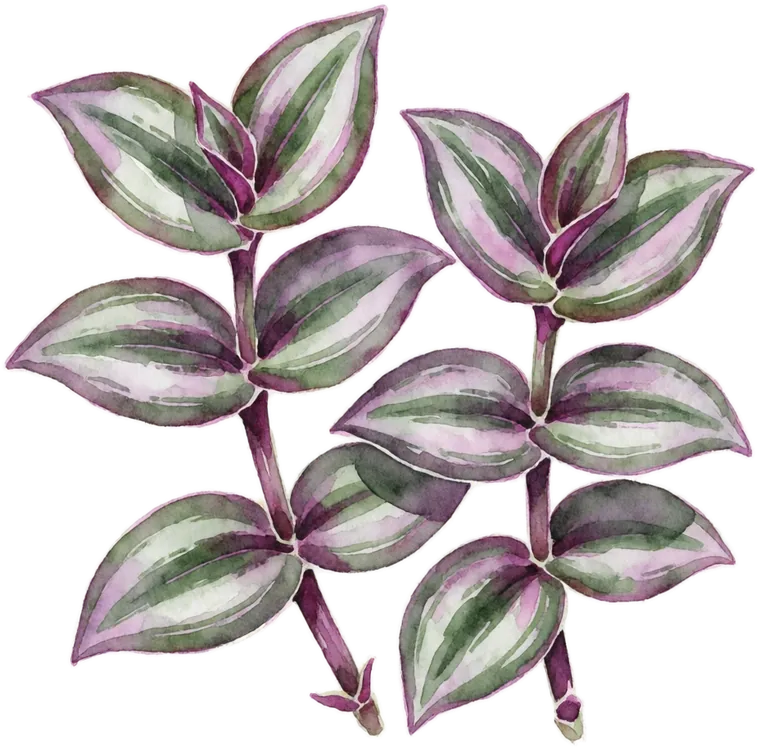
Give it bright, filtered light. Light is what keeps the stripes strong.
- Too little light: the stems lose their lower leaves, the colour fades and the growth turns straggly.
- Too much hot, direct sun washes the colour out.
Water
Water regularly, but let the soil dry out between waterings, and water less in winter. Soil that stays soggy rots the roots and stems.
- Too wet: soft, mushy stems.
- Too dry, even briefly: brown leaf tips and edges.
Soil and pot
Use a peaty potting mix that drains well. A hanging basket is the usual home for it, so the stems can cascade.
Humidity
It tolerates average home humidity as well as humid air.
Warmth
It thrives at 65 to 75°F, and likes nights around 55. Keep it out of cold drafts and away from heating vents.
Feeding
Feed once a month with a balanced liquid fertilizer while it is putting out new growth, and not at all in winter.
Pruning and starting over
Pinch off the stem tips often, and cut the whole plant back hard every spring; it takes heavy pruning well and comes back denser. Pinch out any shoots that turn plain green.
Inch plants lose their lower leaves as they age, whatever you do. When yours gets bare at the base, start a fresh pot from tip cuttings: set four to six 3-inch tips in a small pot of damp potting mix, or stand them in water. They root in about two weeks. The stems snap easily at the joints, so handle them gently, and wear gloves, because the sap irritates skin.
Repotting
Repot only when the pot is packed with roots, into one slightly larger. Most growers skip it and start a new pot from cuttings instead.
Its look-alikes
Two relatives are sold under the same names. Tradescantia fluminensis is the plain green one. Purple heart, Tradescantia pallida, has solid dark purple leaves up to 7 inches long; it needs full sun for its best colour and does not tolerate temperatures below 50°F.
When something looks wrong
Faded colour or lost stripes
Likely causeToo little light, or too much hot direct sun.
What to doMove it into bright, filtered light.
Long bare stems
Likely causeLow light, or simply age.
What to doGive it more light, cut it back, and root the tips to fill the pot or start a new one.
Brown tips or crispy leaves
Likely causeToo much fertilizer, soil that dried out, a chill, or softened water.
What to doWater on time with plain tap water, feed less, and keep it out of cold drafts.
Soft, mushy stems
Likely causeRot from soil that stays soggy.
What to doLet the soil dry between waterings and make sure the pot drains. Cut healthy tips and root them.
Spots or mould on the leaves
Likely causeLeaves that stay wet, or stems packed too tightly.
What to doKeep water off the leaves and thin the plant so air can move through it.
Sticky leaves, cottony tufts, bumps or fine webbing
Likely causeInsects: aphids, mealybugs, scale, whiteflies or spider mites.
What to doKeep the plant apart from your others. Wipe the insects off with a cotton swab dipped in rubbing alcohol, spray the plant down with water, or use insecticidal soap, and repeat until they are gone.
Where this guide comes from
- Tradescantia zebrina, NC State Extension Gardener Plant Toolbox
- Tradescantia zebrina, Zebra Plant, University of Wisconsin-Madison Extension
- Tradescantia zebrina, Plant Finder, Missouri Botanical Garden
- Tradescantia zebrina, Royal Horticultural Society
- How do I care for my Tradescantia zebrina houseplant?, New York Botanical Garden, Mertz Library
- Caring for Houseplants, University of Missouri Extension
- Purple Heart, Tradescantia pallida, University of Wisconsin-Madison Extension
- Tradescantia pallida, NC State Extension Gardener Plant Toolbox
- Common Houseplant Insects and Related Pests, Clemson Cooperative Extension Home & Garden Information Center
- Inch Plant, toxic and non-toxic plants, ASPCA
- How and when do I bring my houseplants back indoors before winter?, Iowa State University Extension
- Growing Indoor Plants, Utah State University Extension
- Help for Houseplants, Utah State University Extension
- Houseplants: Temperature and Humidity, Colorado State University Extension